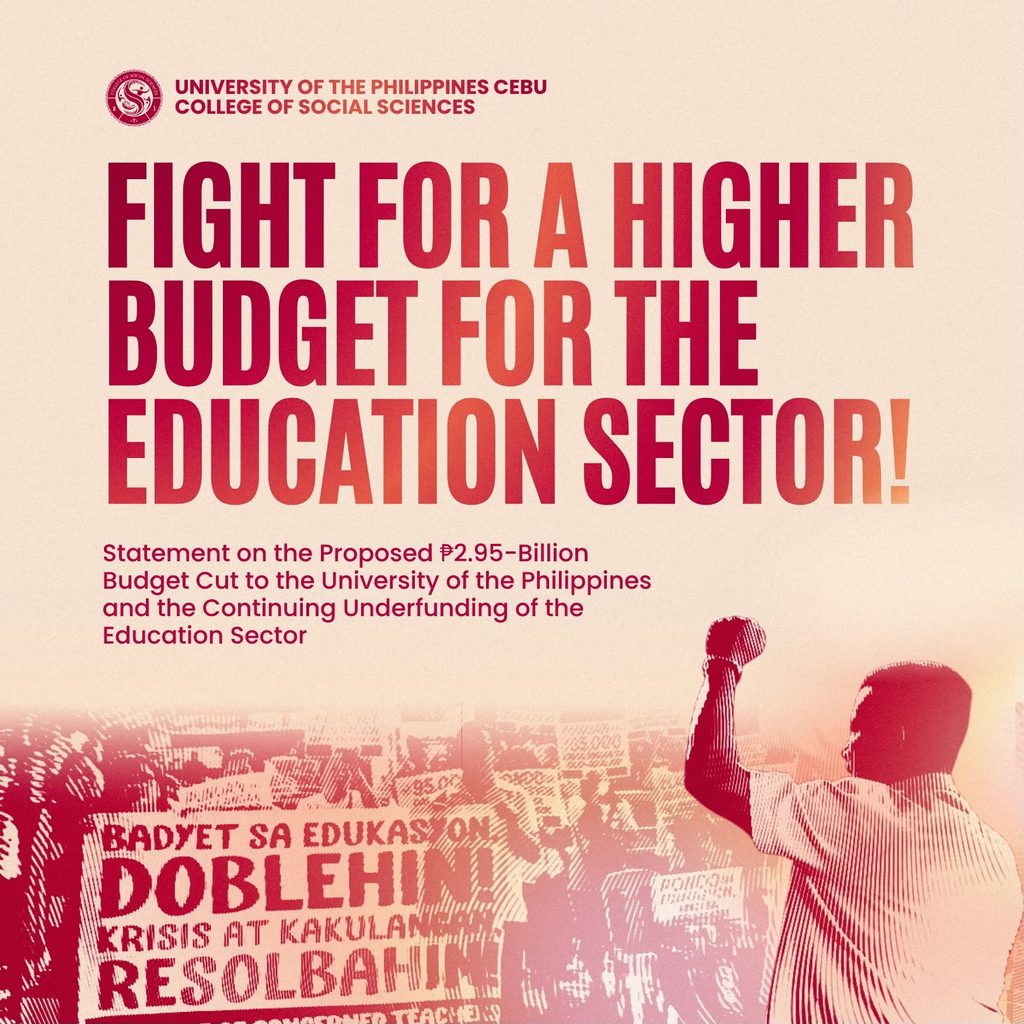
The College of Social Sciences of the University of the Philippines Cebu opposes the proposed budget cuts in the education sector. The said cuts come at a time when the country is facing an education crisis that not only undermines the quality of education but also the development of a nation in need of graduates trained under a holistic system of education.
It can be remembered that the current 2026 education budget is a historic high, amounting to Php 1.3 trillion or 4.4% of the gross domestic product (GDP) of the country. The University of the Philippines (UP) also enjoyed a historic hike in its budget, getting as much as Php 29.47 billion with a recorded increase of 6.78 billion from its 2025 budget. Education groups and academic institutions recognized the strong pressure politics of social movements against corruption in 2025, calling for the reallocation of funds from questionable infrastructure projects to the funding of social services, to be among the significant factors that push these unprecedented budget increases.
This year’s budget deliberation threatens these victories as UP and the education sector in general are threatened with budget cuts. Under the proposed 2027 budget, the Department of Education is allocated with Php 975.96 billion, a significant decrease from its 2026 budget. Likewise, UP is threatened to suffer a budget cut of Php 2.95 billion. In the case of UP, the said decrease in budget allocation will significantly affect the delivery of its academic functions and administrative services. A higher rather than a lower budget is needed to address the issues on the lack of facilities, plantilla items for faculty, REPS, and admin staff, support for athletes, and the regularization of contractual yet essential employees, among others.
The College of Social Sciences calls for a higher budget for the entire education sector. What was achieved as historic victories in the budgetary allocation for the sector this year must not only be maintained but also pushed to achieve a progressive system of budgeting for the sector. Only through a progressive system of budgeting will the country be hopefully able to realize, at least in the near future, what UNESCO has set as the ideal budgetary allocation for education pegged at 6% of the country’s GDP.